
Air Distribution That Supports Balanced Comfort
Ductwork Installation in Amarillo for homes with inadequate airflow, rooms that never reach temperature, or renovations requiring new distribution
Rooms distant from the air handler stay warmer in summer and cooler in winter when existing ducts are undersized, crushed, or poorly routed through unconditioned attic spaces. HVAC M.D. installs ductwork for properties in Amarillo requiring new distribution systems, replacement of damaged ducts, or expansion to serve additions and finished spaces. Proper duct design accounts for air handler capacity, the distance conditioned air must travel, and the number of direction changes between equipment and registers, preventing the velocity losses and pressure drops that leave remote rooms uncomfortable regardless of thermostat setting.
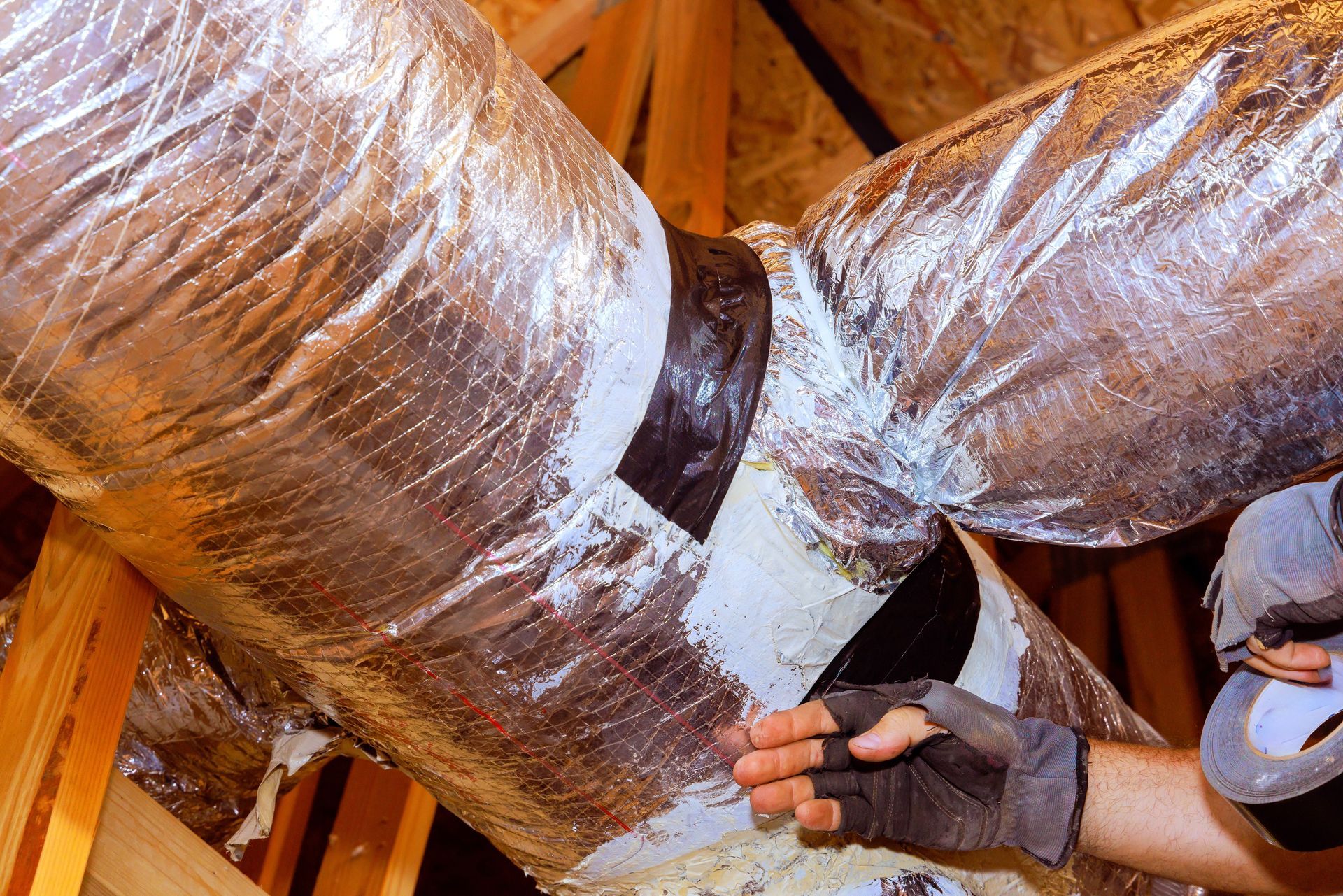
Duct sizing follows Manual D calculations rather than simply matching existing duct dimensions, determining trunk and branch sizes based on cubic feet per minute required at each register and the static pressure the air handler can overcome. Return air systems are designed to prevent negative pressure that pulls unconditioned attic air into living spaces through ceiling penetrations, and supply ducts to rooms requiring cooling receive insulation values appropriate for Amarillo's attic temperatures that reach 140 degrees in summer. Duct connections are sealed with mastic rather than standard cloth tape that degrades in attic heat, preventing the leakage that reduces system capacity and forces equipment to run longer to condition spaces.
Request an evaluation to identify ductwork concerns affecting temperature balance and determine whether modification or replacement addresses your home's airflow problems..
The Difference Between Adequate and Inadequate Duct Systems
Trunk lines are sized to maintain air velocity below 900 feet per minute, preventing the whistling noise and pressure drop that occur in undersized ducts, while branch runs to individual rooms balance airflow so closer rooms do not receive disproportionate conditioning at the expense of distant spaces. Flexible duct runs are supported every four feet and kept to lengths under 25 feet with minimal bends, since sagging ducts and excessive turns restrict airflow even when nominal diameter appears adequate.
Once ductwork installation finishes, all rooms receive consistent airflow, eliminating the hot and cold spots that occurred when undersized or damaged ducts starved distant spaces. Temperature recovery improves as conditioned air reaches living spaces rather than leaking into attics, and the system reaches thermostat settings without extended run times. Register airflow feels stronger and more uniform across the home, and the air handler operates more quietly without the strain of pushing air through restrictive or leaking ducts.
Installation includes duct fabrication or assembly, connection to existing equipment, insulation in unconditioned spaces, and sealing of joints and connections, but does not include air handler replacement, register upgrades, or structural modifications beyond standard attic access. Homes with complex layouts or significant distance between equipment and living spaces may require zoning systems to achieve balanced comfort.
What Property Owners Usually Ask
Ductwork questions often address how distribution problems develop, what installation involves, and how improved ducts change system performance in Amarillo homes.
What causes uneven heating and cooling across rooms?
Undersized ducts restrict airflow to distant rooms, crushed or disconnected flex ducts reduce capacity, and leaks at connections dump conditioned air into attics before it reaches living spaces, leaving some areas consistently uncomfortable.
How is ductwork sized correctly?
Manual D load calculations determine required airflow for each room based on square footage and heat gain or loss, then specify trunk and branch dimensions that deliver that airflow without excessive velocity or pressure drop.
Why does attic ductwork lose efficiency in Amarillo?
Attic temperatures exceeding 140 degrees in summer cause heat gain into supply ducts carrying 55-degree air, warming it before reaching registers and reducing cooling capacity, while inadequate insulation allows greater temperature transfer.
When should ductwork be replaced instead of repaired?
Ducts with multiple crushed sections, extensive disconnections, or asbestos-containing materials warrant full replacement rather than piecemeal repair, as do systems significantly undersized for current equipment capacity or home additions.
What indicates ductwork installation solved distribution problems?
Rooms that previously stayed warmer or cooler than the thermostat setting now reach target temperatures, airflow at registers increases noticeably, and system run times decrease as conditioned air reaches living spaces efficiently rather than leaking into unconditioned areas.
HVAC M.D. evaluates existing duct systems to determine whether sealing, modification, or complete replacement best addresses airflow and temperature balance concerns. Schedule a duct assessment to review distribution options for your property's layout and comfort requirements.